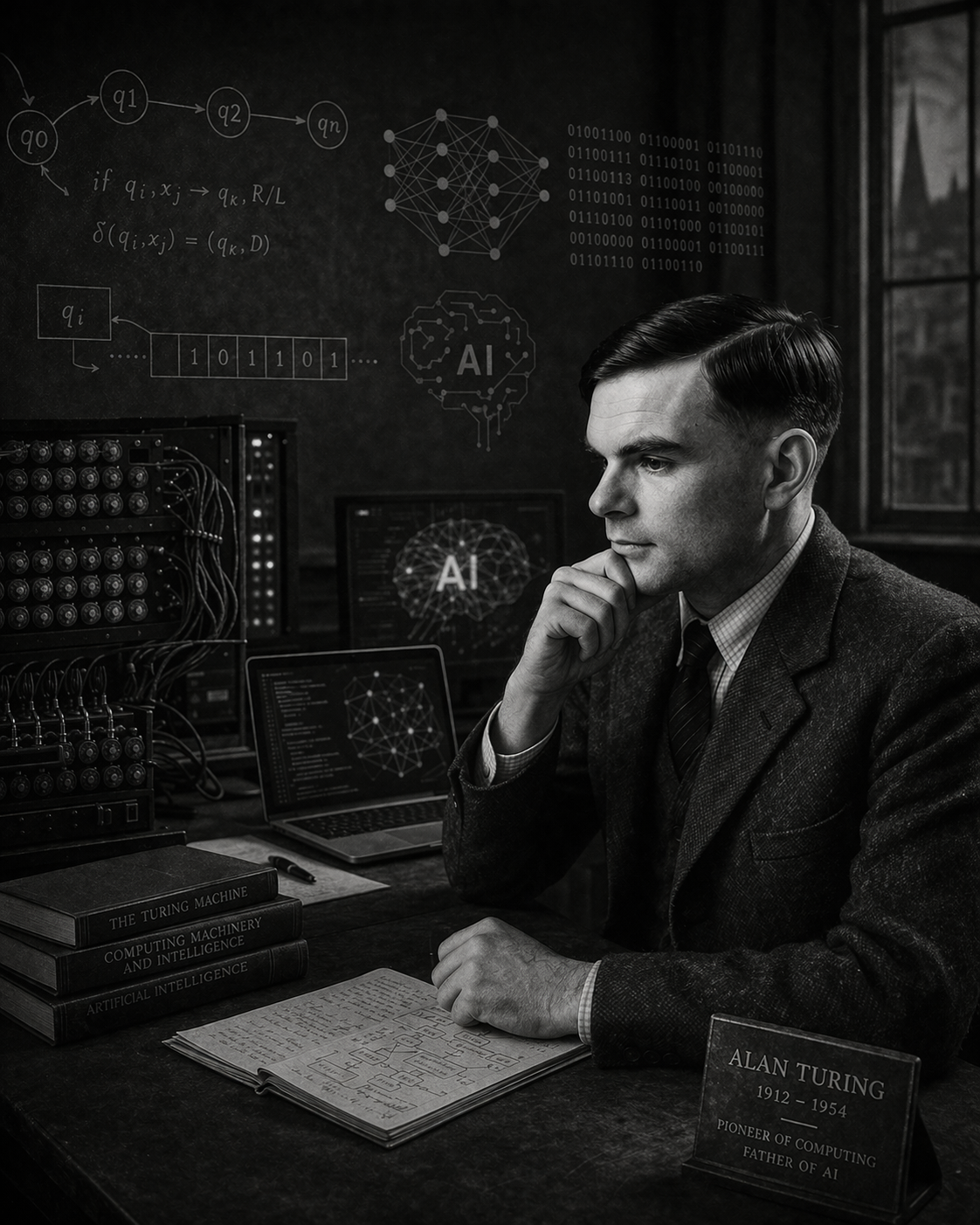
Alan Turing stands as one of the most influential figures in the history of computing and artificial intelligence. Often called the “Father of Theoretical Computer Science and AI,” Turing transformed abstract mathematics into the foundation of modern digital systems.
Long before computers became a reality, he introduced revolutionary ideas about machine logic, computation, and intelligence. Today, every algorithm, software system, and AI model reflects the principles he first imagined.

Born in 1912 in London, Alan Turing demonstrated exceptional talent in mathematics and logic from a young age. He later studied at the University of Cambridge, where his fascination with numbers evolved into a deeper exploration of computation and problem-solving.
Turing’s curiosity wasn’t limited to solving equations—he wanted to understand how machines could replicate human thinking. This vision became the driving force behind his groundbreaking contributions.
In 1936, Turing introduced the concept of the Turing Machine , a theoretical device capable of simulating any computational process.
This model introduced key principles that power modern computers:
The Turing Machine is still used today to define what can and cannot be computed, making it one of the most important concepts in computer science.
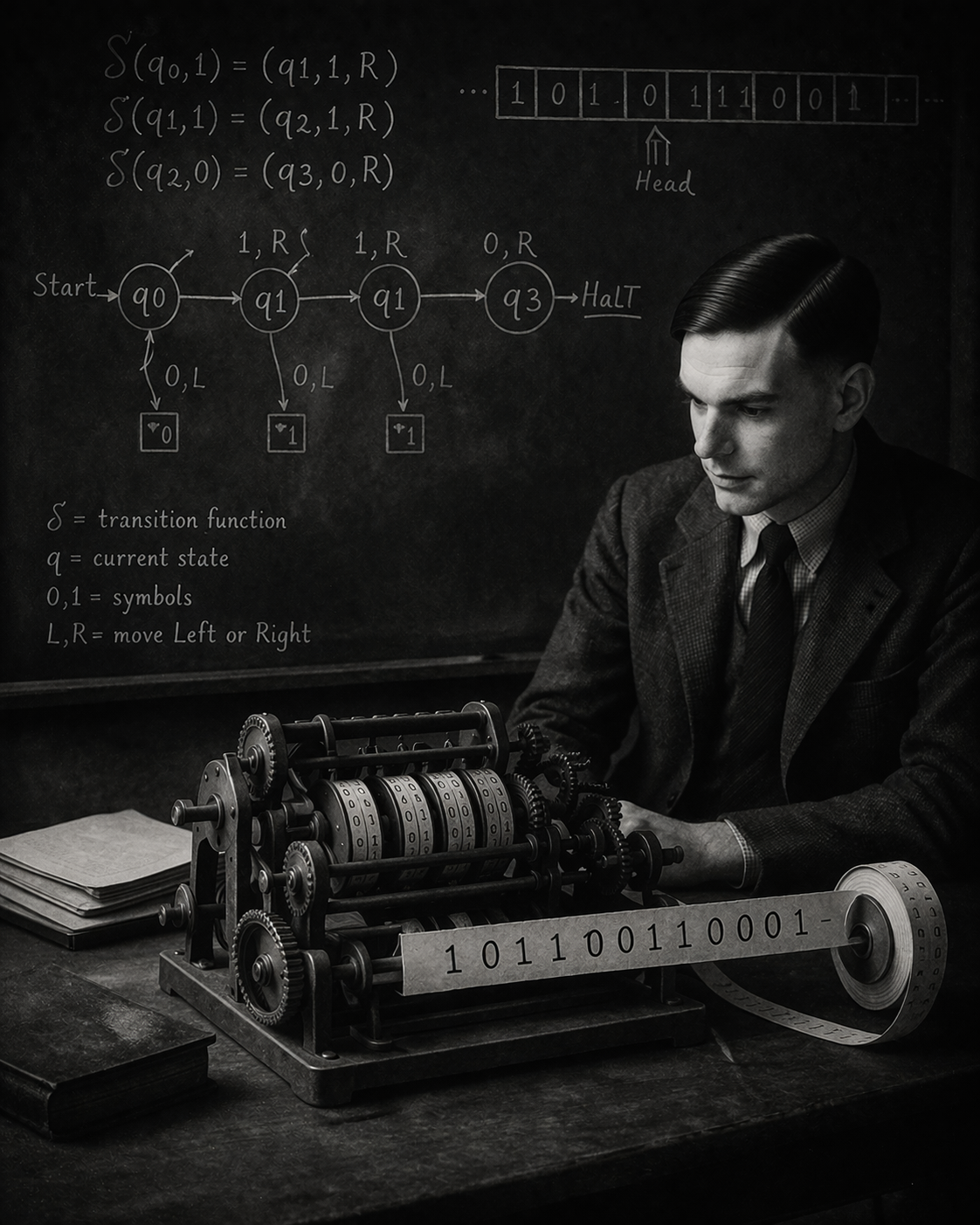
During World War II, Turing played a critical role in breaking encrypted German communications. Working at Bletchley Park, he helped design machines that could decode the Enigma cipher used by Nazi forces.
His contributions:
This work demonstrated the real-world impact of computational thinking and machine-assisted problem solving.
Alan Turing was among the first to explore whether machines could think. In 1950, he introduced the famous Turing Test, a method to evaluate machine intelligence.
The idea was simple yet profound: If a machine can imitate human responses convincingly, it can be considered intelligent. This concept became the foundation of:
Turing’s ideas are deeply embedded in today’s digital world. His work directly influences:
From smartphones to advanced AI models, modern technology continues to evolve based on his foundational theories. Organizations like Aayan Infotech are leveraging these principles to build cutting-edge AI solutions, intelligent applications, and next-generation digital systems.
Although Alan Turing’s contributions were not fully recognized during his lifetime, he is now celebrated globally as a pioneer of computing and AI.
His legacy is honored through:
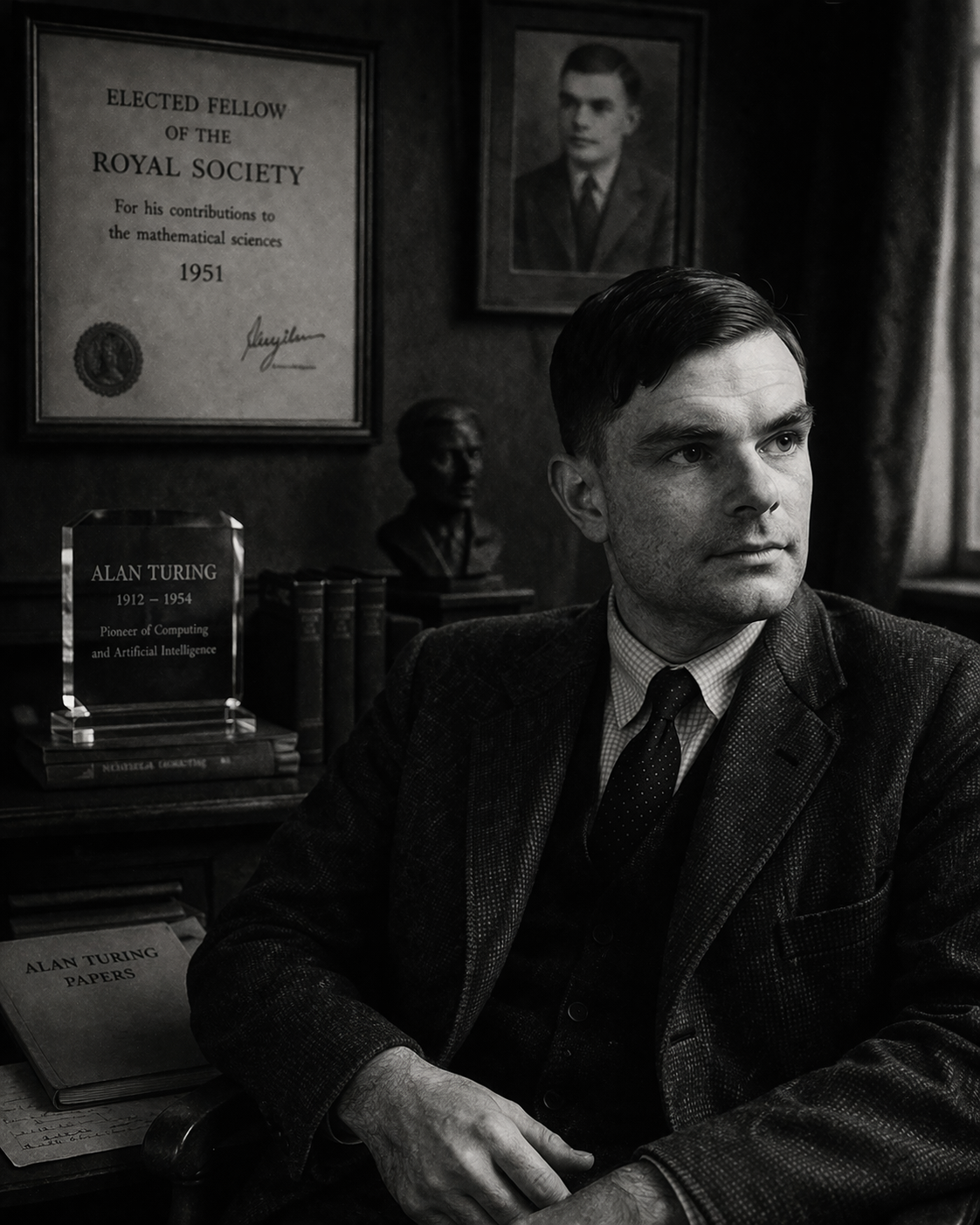
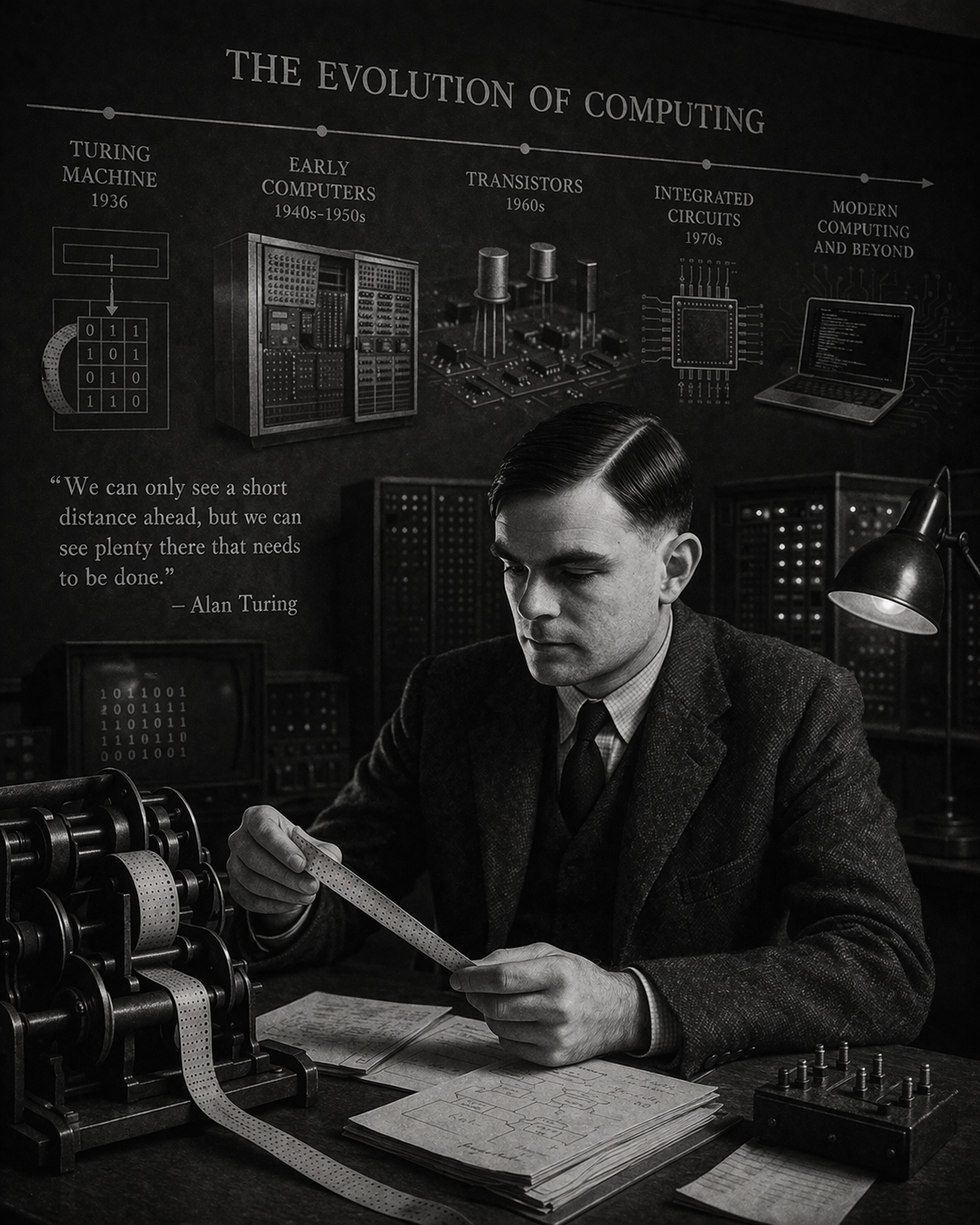
Alan Turing played a crucial role in bridging the gap between theory and practical computing.
He connected:
His work marked the transition from abstract concepts to intelligent computing systems.
Key Facts About Alan Turing
In today’s AI-driven world, Alan Turing’s vision is more relevant than ever. Every intelligent system—from search engines to generative AI—operates on the logic he introduced. His work teaches us that innovation begins with bold questions:
Can machines think?
That single question reshaped the future of humanity.