
Charles Babbage is widely regarded as the “Father of the Computer”, a visionary mathematician and inventor whose groundbreaking ideas laid the foundation for modern computing systems. In the 19th century, long before electronic computers existed, Babbage conceptualized machines capable of performing complex calculations automatically.
His most revolutionary invention, the Analytical Engine, introduced the core principles of modern computers—processing, memory, input, and output. Today, nearly every digital system, from software applications to Artificial Intelligence, can trace its conceptual origins back to Babbage’s work.
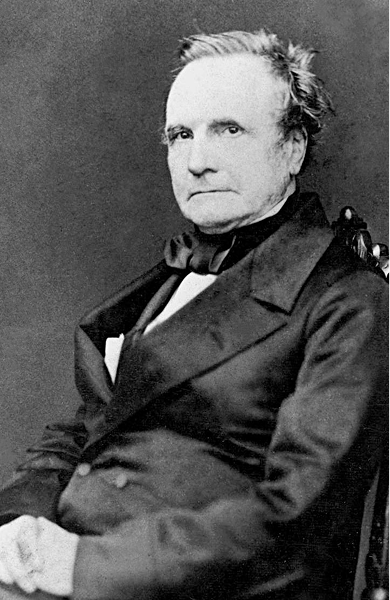
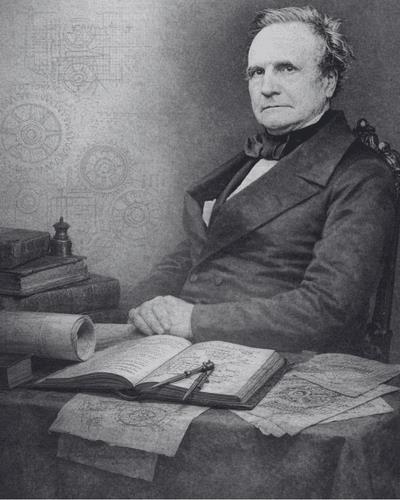
Born in 1791 in London, Charles Babbage displayed exceptional talent in mathematics from an early age. He studied at the University of Cambridge, where he became dissatisfied with the limitations of existing mathematical tools.
During this time, Babbage developed a strong interest in automation and precision. He believed that human errors in calculations—especially in navigation and engineering tables—could be eliminated using machines. This belief became the driving force behind his innovations.
Before creating the Analytical Engine, Babbage designed the Difference Engine, a mechanical calculator intended to compute polynomial functions and produce accurate mathematical tables.
This invention was groundbreaking because:
Although the machine was never fully completed during his lifetime due to funding and engineering challenges, it proved that automated calculation was possible.
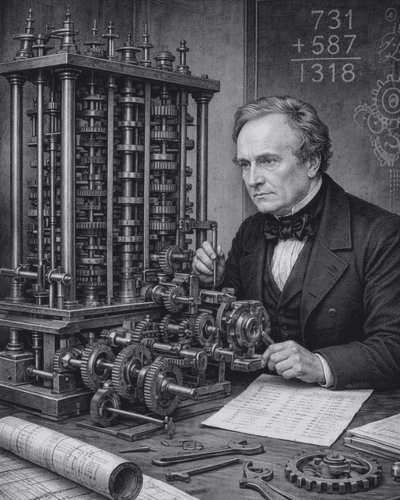
Babbage’s most significant contribution came with the design of the Analytical Engine, considered the first concept of a general-purpose computer.
This machine included features that resemble modern computers:
Unlike earlier machines, the Analytical Engine was designed to execute instructions—making it programmable. This concept marked the birth of modern computing architecture.
One of the most important collaborations in computing history was between Charles Babbage and Ada Lovelace.
While Babbage designed the Analytical Engine, Lovelace recognized its broader potential. She wrote the first algorithm intended for the machine, effectively becoming the world’s first programmer. Together, they introduced the idea that machines could go beyond numbers and process symbols, patterns, and logic—concepts central to modern software and AI.
Charles Babbage’s ideas were far ahead of the technology available in his era. He envisioned machines that could:
These ideas form the backbone of:
His vision transformed computation from manual effort into automated intelligence.
Although Babbage never completed a fully functional computer, his designs directly influenced future generations of scientists and engineers. Modern computing systems reflect his original concepts:
Today’s technologies—cloud computing, machine learning, and AI—are built on principles first introduced by Babbage.
Organizations like Aayan Infotech continue to build on these foundations by delivering advanced digital solutions, software systems, and AI-driven innovations.

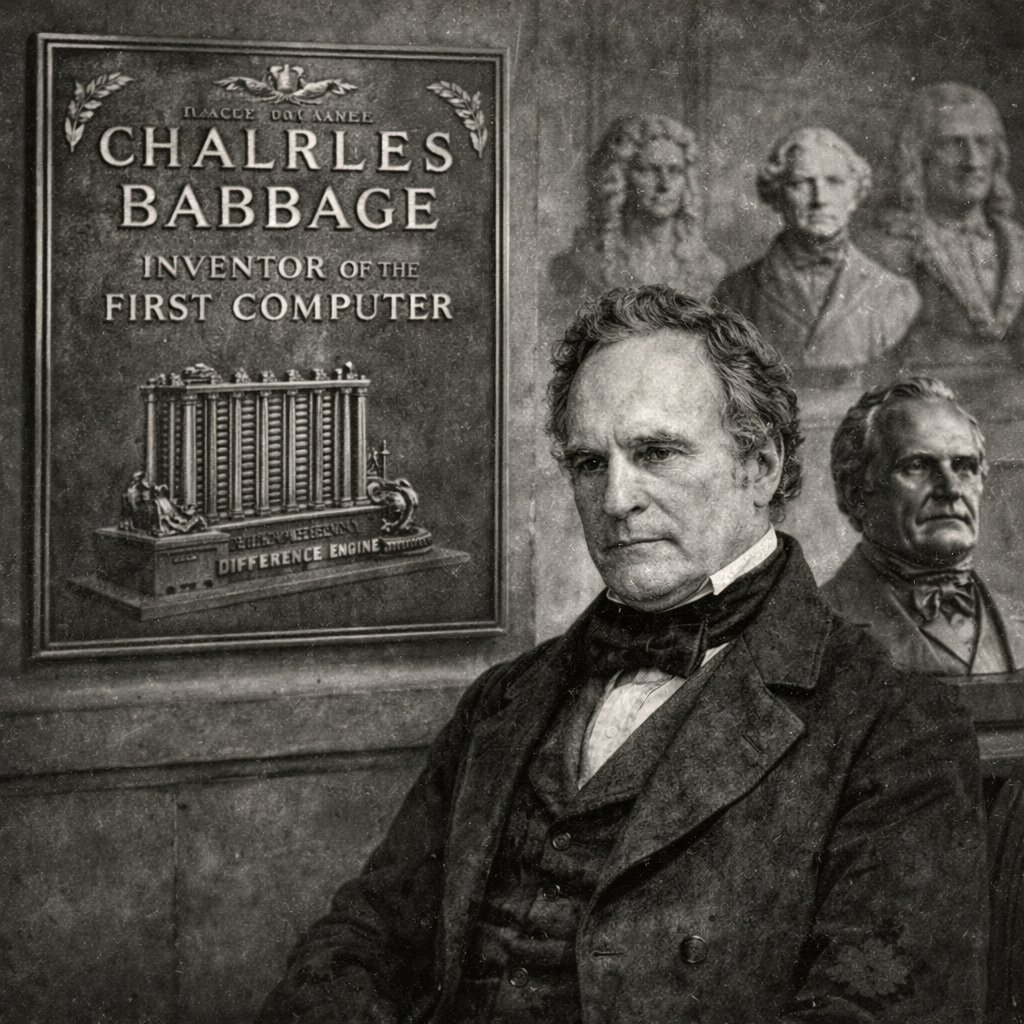
During his lifetime, Charles Babbage did not receive the recognition he deserved. However, today he is celebrated as one of the most influential figures in technological history.
His contributions are honored through:
His work remains a cornerstone of digital innovation.
The journey of computing—from mechanical tools to modern AI—begins with Charles Babbage.
He bridged the gap between:
His inventions represent the transition from early calculation tools to the concept of programmable machines.
Key Facts About Charles Babbage:
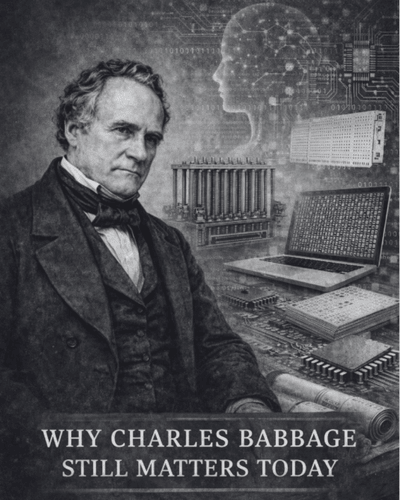
In today’s digital era, Charles Babbage’s ideas are more relevant than ever. Every software application, algorithm, and AI system operates on principles he first envisioned.
His work reminds us that innovation begins with bold ideas—even when the technology to realize them does not yet exist.
Modern tech companies and innovators continue to build on his legacy, transforming industries through automation, intelligence, and digital transformation.