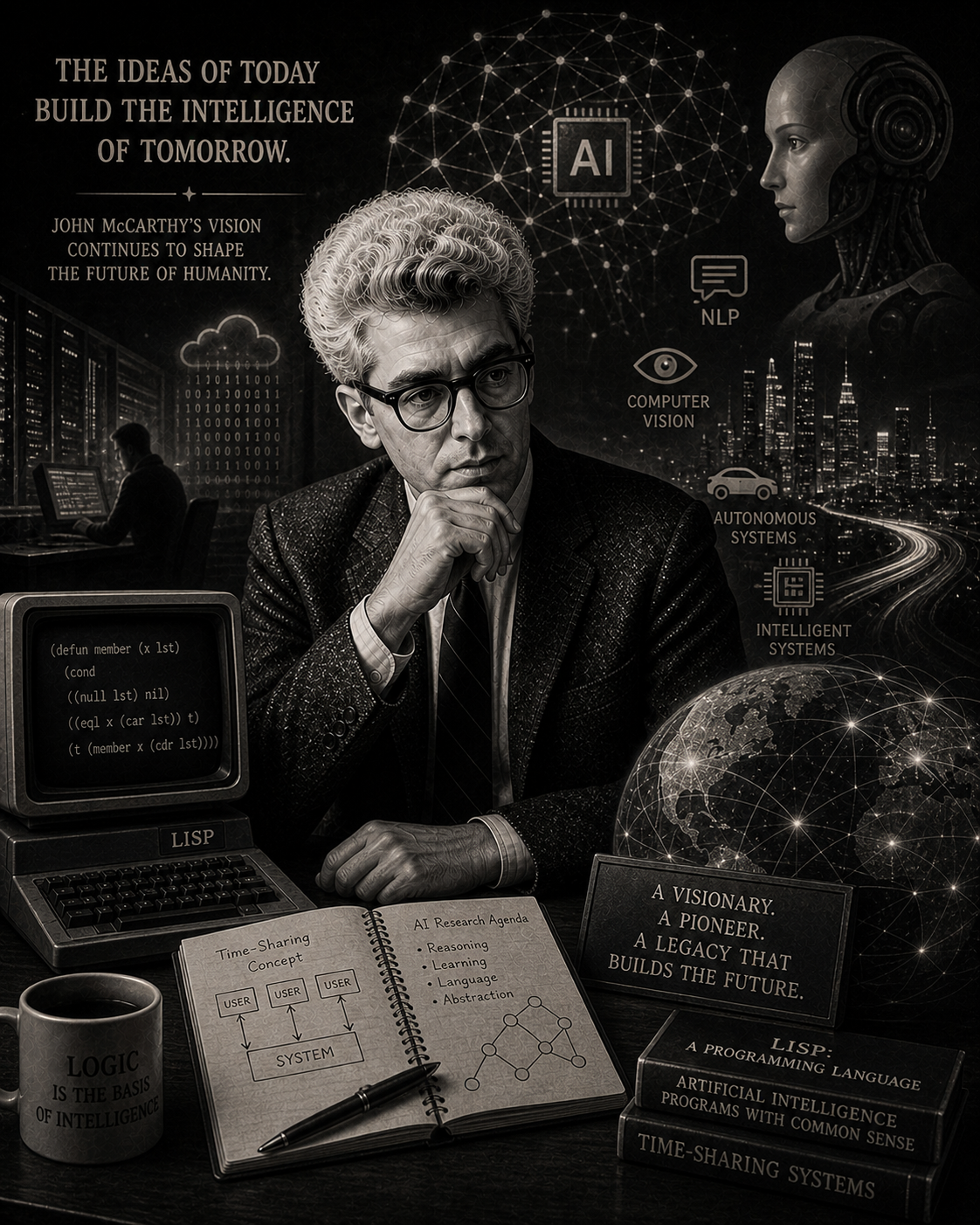
John McCarthy changed the direction of computing. He introduced the term Artificial Intelligence (AI) and built the foundation for intelligent machines. His ideas shaped how computers learn, reason, and solve problems.
Today, AI powers search engines, robotics, and automation. Many of these systems trace their roots to McCarthy's early work. He believed machines could simulate human intelligence. That belief drove decades of innovation.
He did not only imagine the future. He built tools that made it possible.
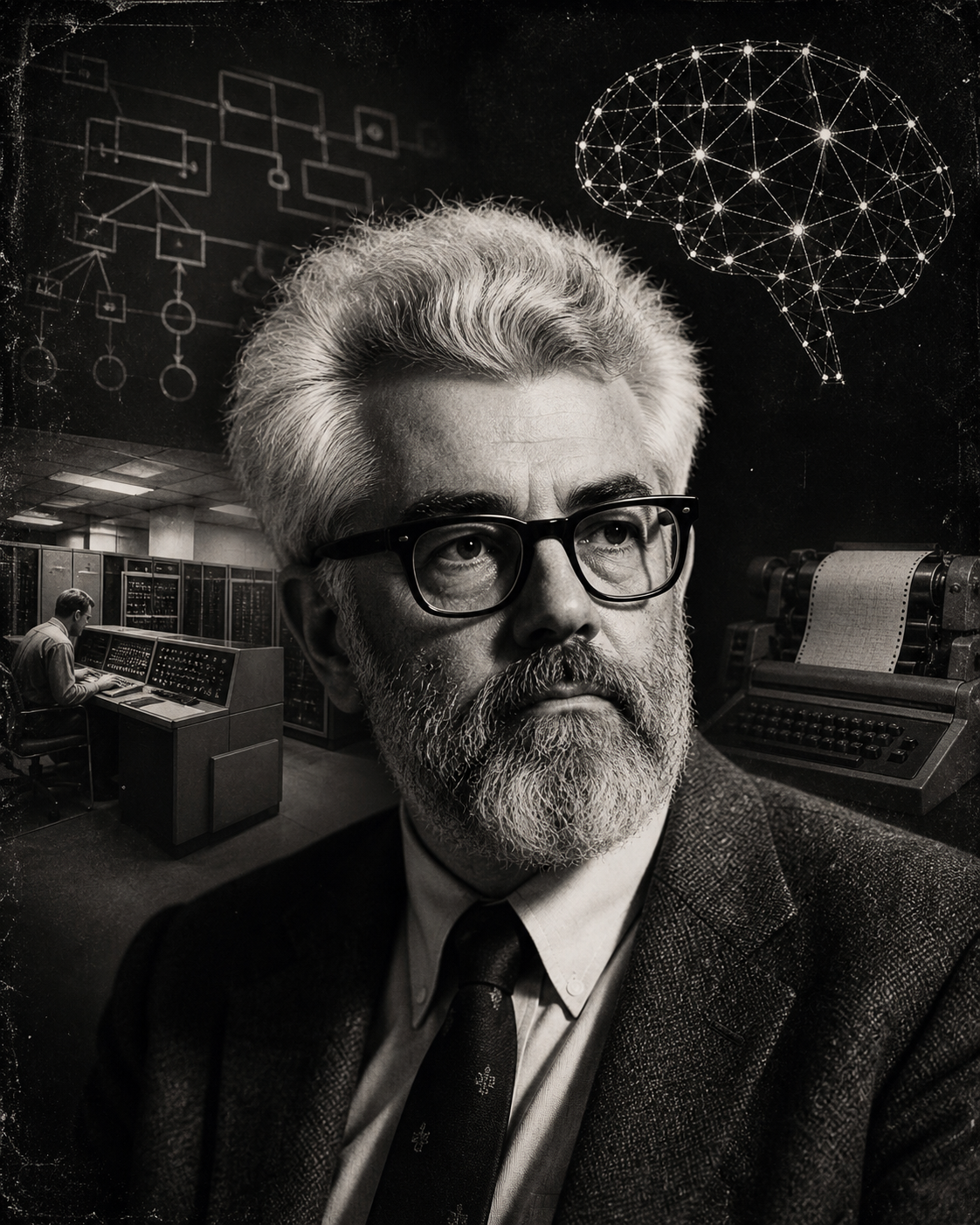

John McCarthy was born in 1927 in Boston, Massachusetts. He showed strong mathematical ability at a young age. His curiosity pushed him toward complex problem solving.
He studied mathematics at California Institute of Technology. Later, he earned a Ph.D. in mathematics from Princeton University. His academic journey gave him a deep understanding of logic and computation.
During his studies, he explored how machines could perform human-like reasoning. This idea became the core of his career.
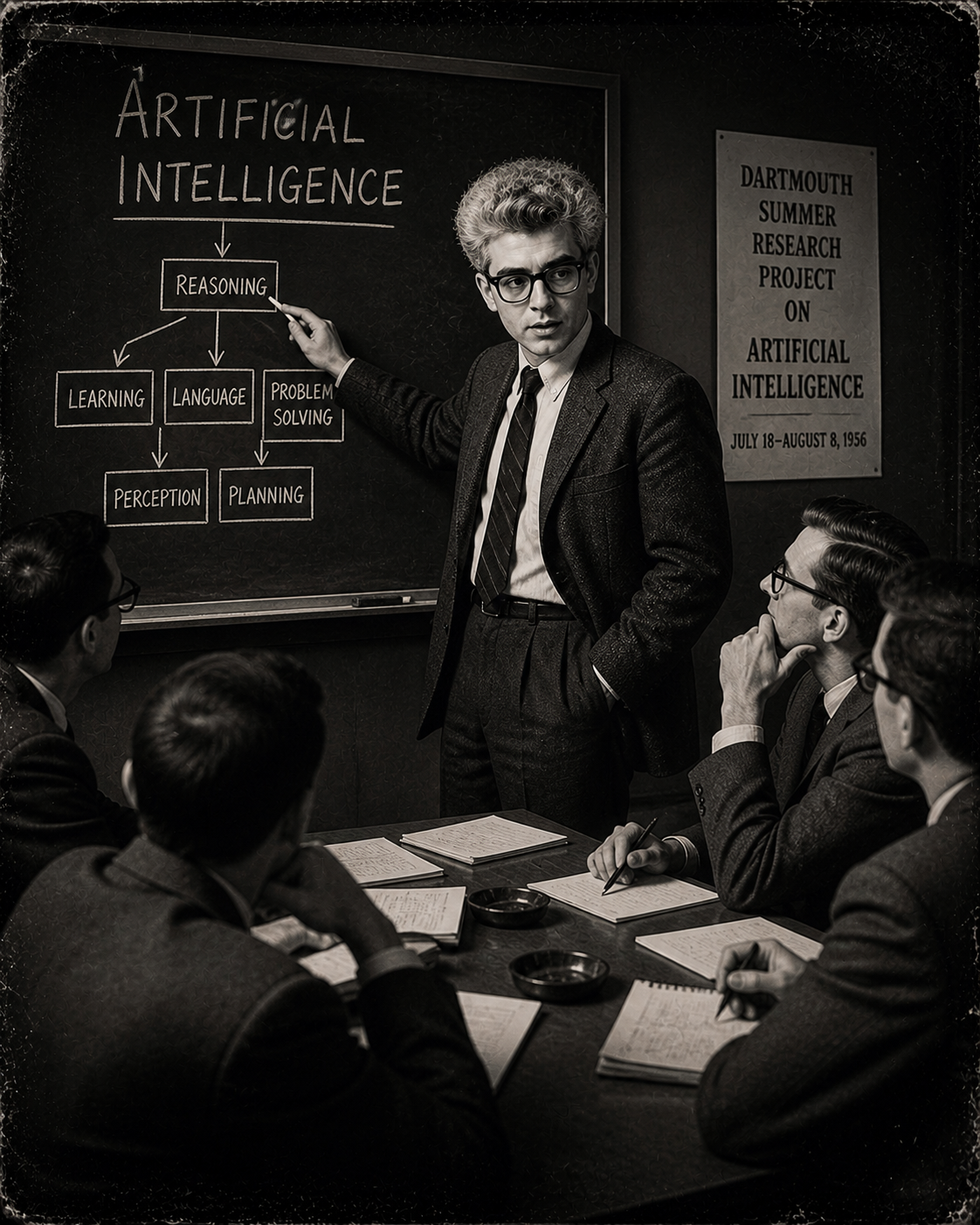
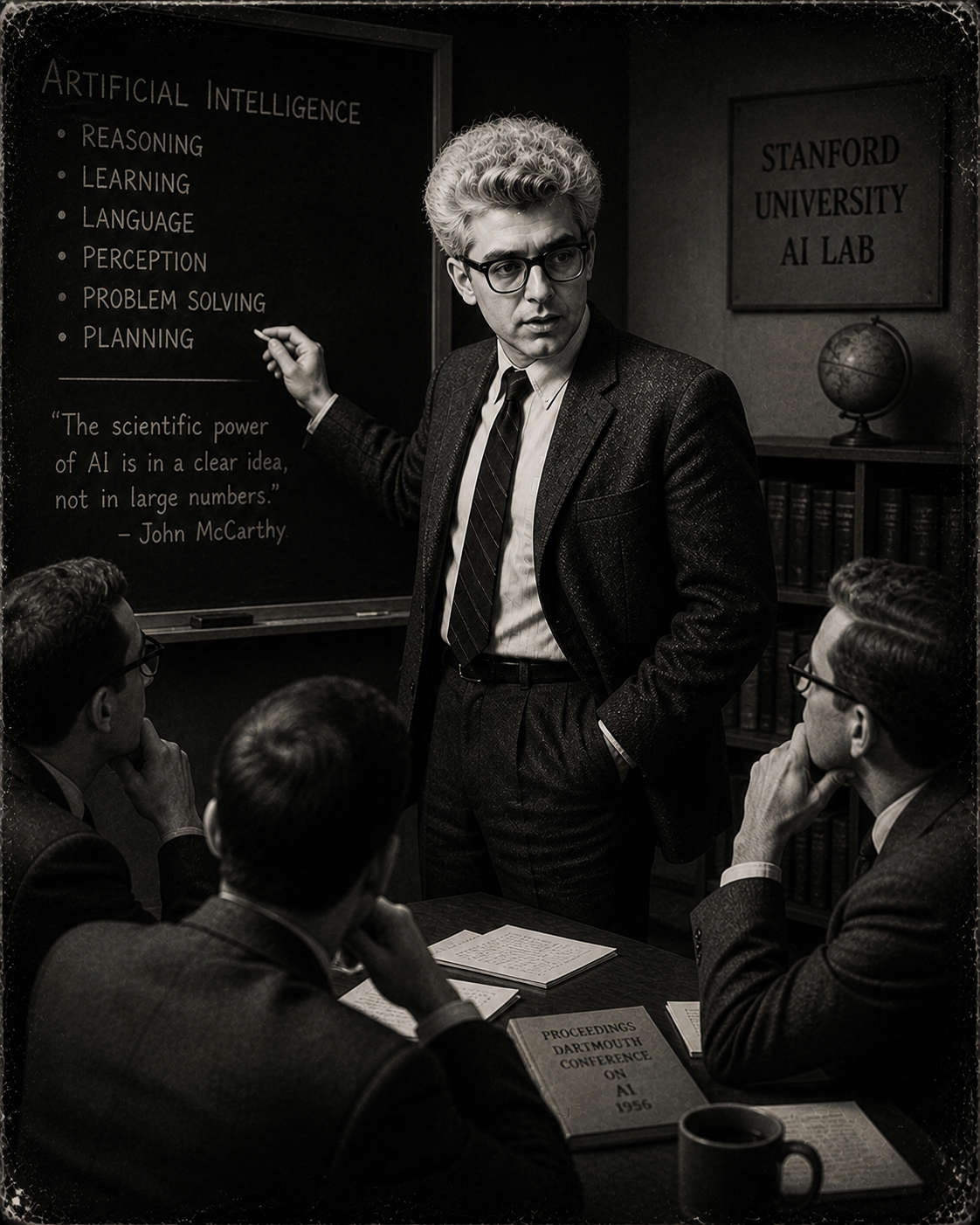
In 1956, McCarthy organized the famous Dartmouth Conference. This event marked the official birth of Artificial Intelligence as a field.
He introduced the term "Artificial Intelligence" during this conference. The goal was simple but bold: create machines that can think.
This idea changed computing forever. Researchers began exploring learning algorithms, reasoning systems, and automation.
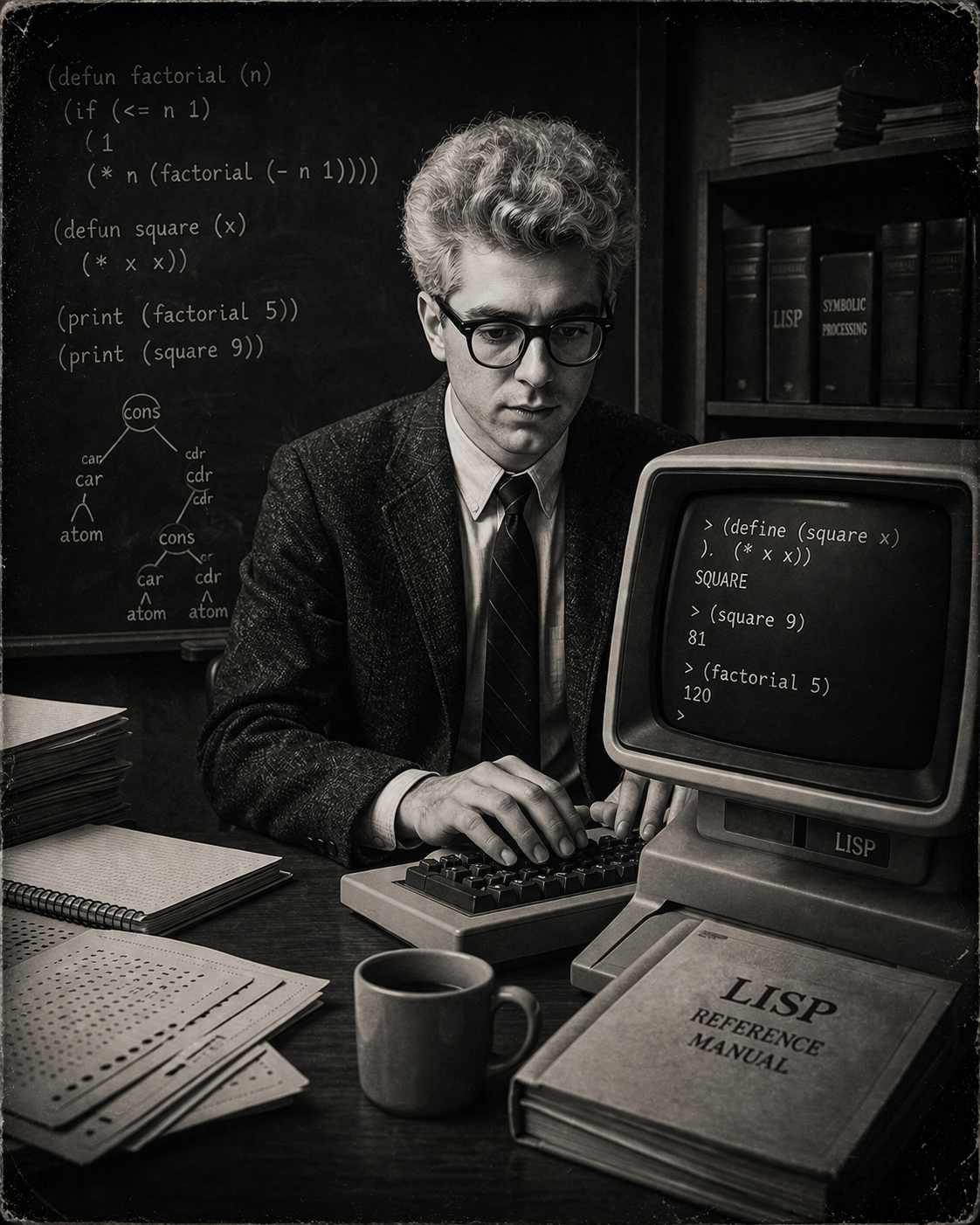
One of McCarthy's greatest achievements was developing Lisp. It became one of the earliest high-level programming languages.
Lisp focused on symbolic processing. This made it perfect for AI research. Unlike other languages, Lisp handled complex logic and recursive functions with ease.
Key Features of Lisp include simple and flexible syntax, strong support for recursion, symbolic computation, and dynamic memory management. Modern languages still borrow ideas from Lisp, proving McCarthy's design shaped later innovation.
Lisp allowed researchers to build intelligent systems faster. Many AI applications relied on it for decades.
The Dartmouth Conference created a new scientific discipline. It brought together leading thinkers who shaped AI research.
Without this event, AI might have developed much slower. McCarthy gave the field a clear identity and direction.
His leadership at this early stage helped transform a bold idea into a structured area of research.
This moment still matters because it shaped how AI research is organized today:
It marked the true beginning of AI as a discipline.
McCarthy also pioneered time-sharing in computing. Before this, computers handled one task at a time. This limited efficiency and access.
Time-sharing allowed multiple users to use a computer simultaneously. It improved productivity and reduced costs.
Its impact reached far beyond the machines of its time:
Today's cloud systems reflect these principles. McCarthy's work helped create shared computing environments.
McCarthy focused on making machines reason logically. He worked on problem solving, knowledge representation, logical reasoning, and machine learning foundations.
He introduced the concept of formal logic in AI systems. This allowed machines to make decisions based on structured rules.
McCarthy believed machines could simulate human reasoning. He worked on programs that could solve puzzles and make decisions.
His research pushed AI beyond theory. It became a practical field with real-world applications.
McCarthy taught at top institutions, including Stanford University. He helped build one of the leading AI research labs.
He mentored many students who became leaders in technology. His teaching style encouraged deep thinking and experimentation.
His influence extended beyond his own work. He shaped generations of researchers.
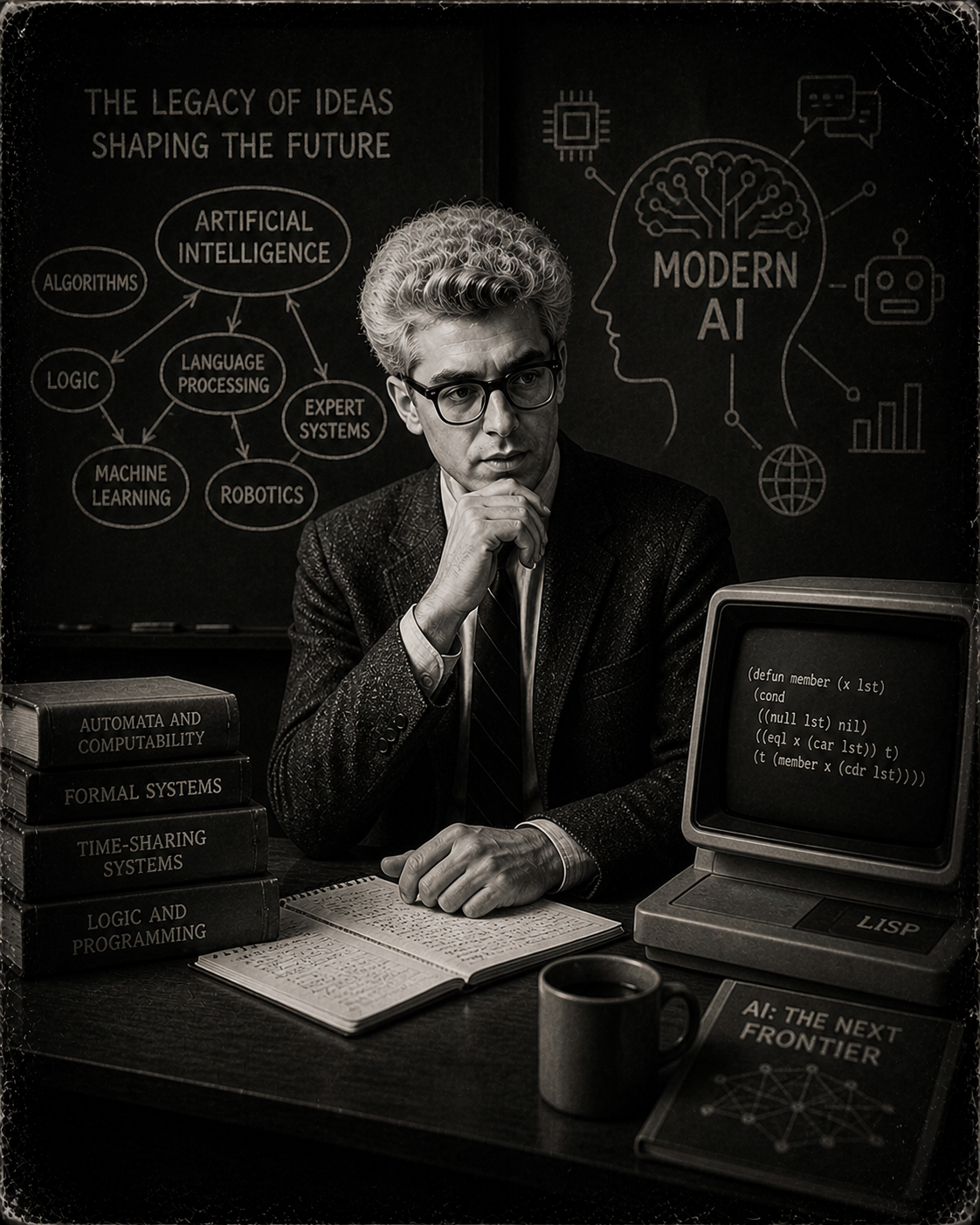
Modern AI systems rely on concepts McCarthy introduced. These include:
AI today includes machine learning, neural networks, and automation. While these evolved later, McCarthy's work created the foundation.
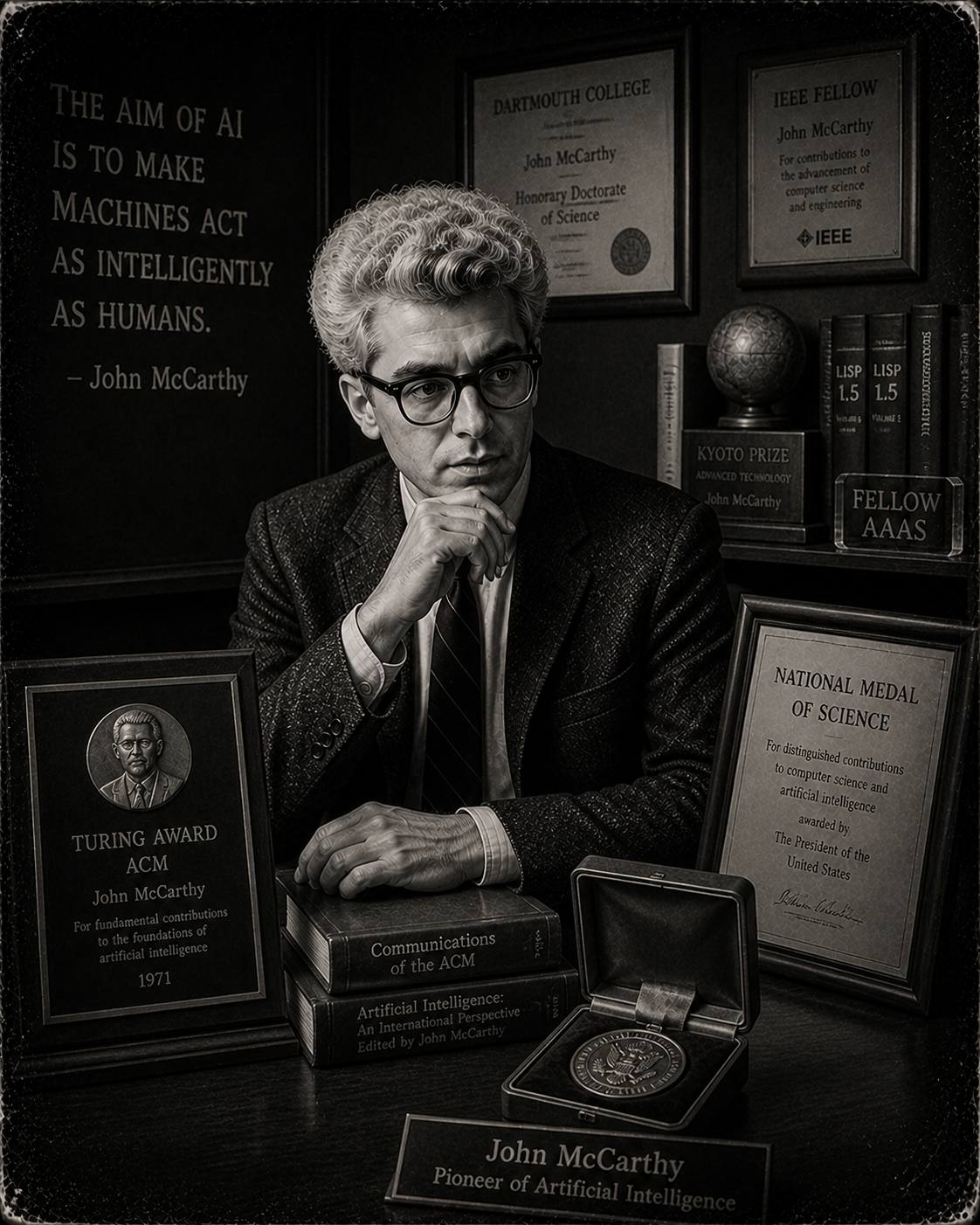
John McCarthy received several honors for his work. These include:
These awards recognized his impact on computing and AI.
These honors reflect the lasting significance of his contributions to the foundations of artificial intelligence and computer science.
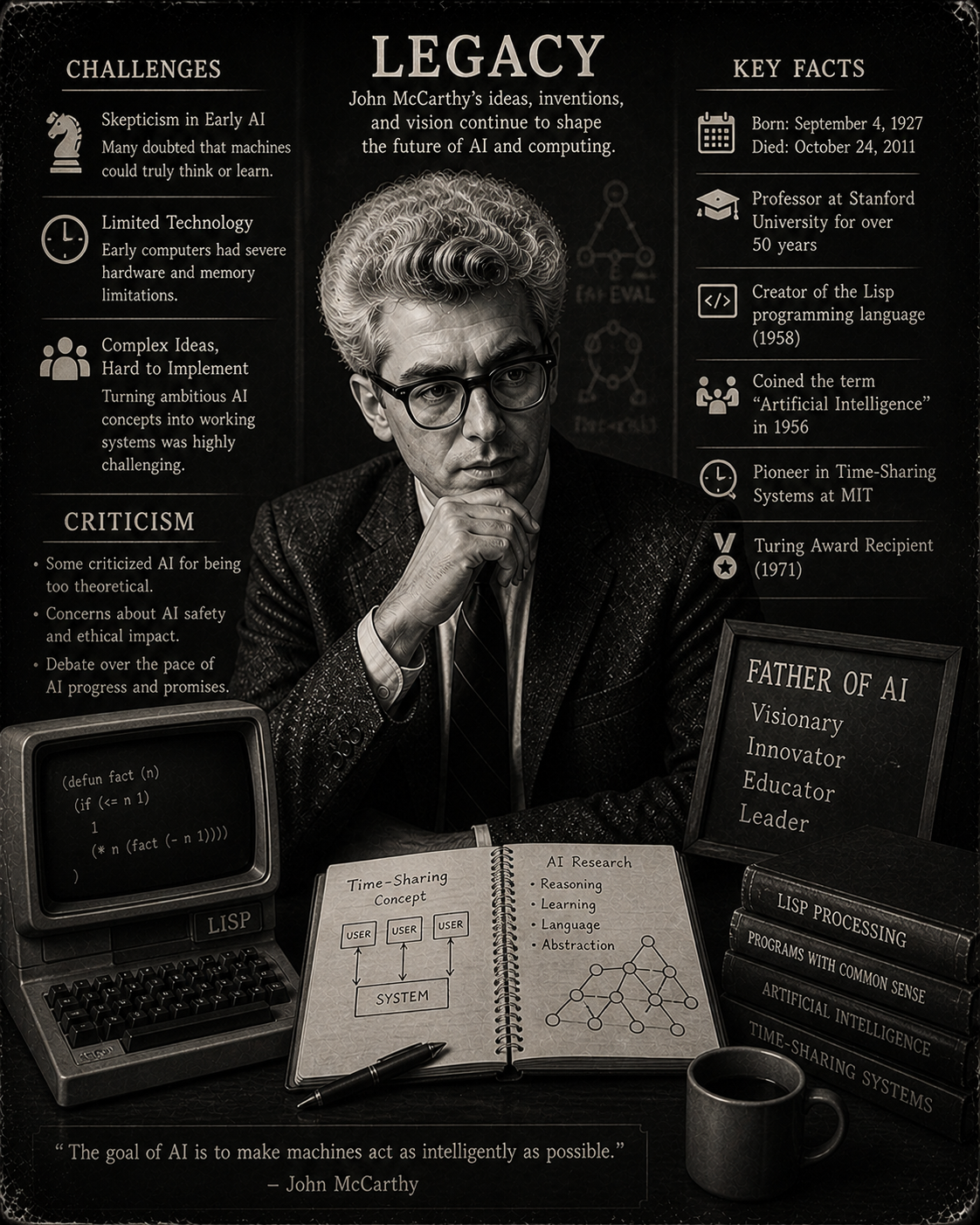
McCarthy's vision faced challenges. Early AI systems struggled with real-world complexity, and computing power limited progress.
Some researchers disagreed with symbolic AI approaches. They preferred statistical models. Despite criticism, his contributions remained essential, and many modern systems combine both approaches.
Key Facts About John McCarthy:
His work remains a cornerstone in the story of computing and intelligent systems.
AI drives modern industries. Businesses rely on automation, data analysis, and machine intelligence. McCarthy's ideas made this possible. He showed that machines can process logic and solve problems.
His lasting influence appears in:
McCarthy believed AI would improve human life. He saw machines assisting with complex decisions and repetitive tasks. His vision continues today in smart automation, AI-powered healthcare, intelligent business systems, robotics, and innovation. The future he imagined is becoming reality.
Companies building AI solutions still use these principles, and his ideas continue to guide modern innovation.